July Book of the Month – Caste: The Origins of Our Discontents
July 14, 2024
Eliyah Brawdy
August 25, 2025
Fuelling for the Long Run: Building a Lasting Relationship with Food and Sport
by Sandra Kilmartin, BSc, RD (she/her)
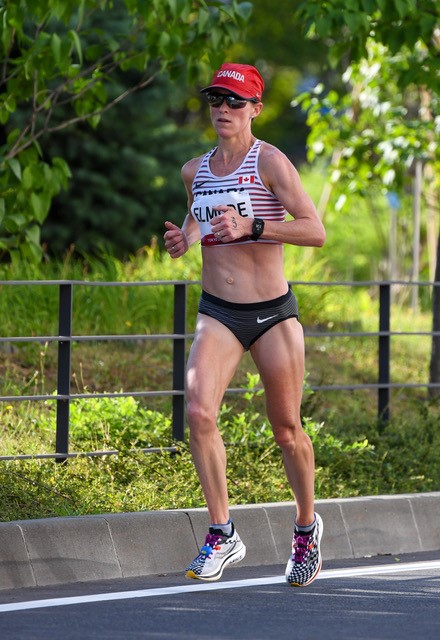
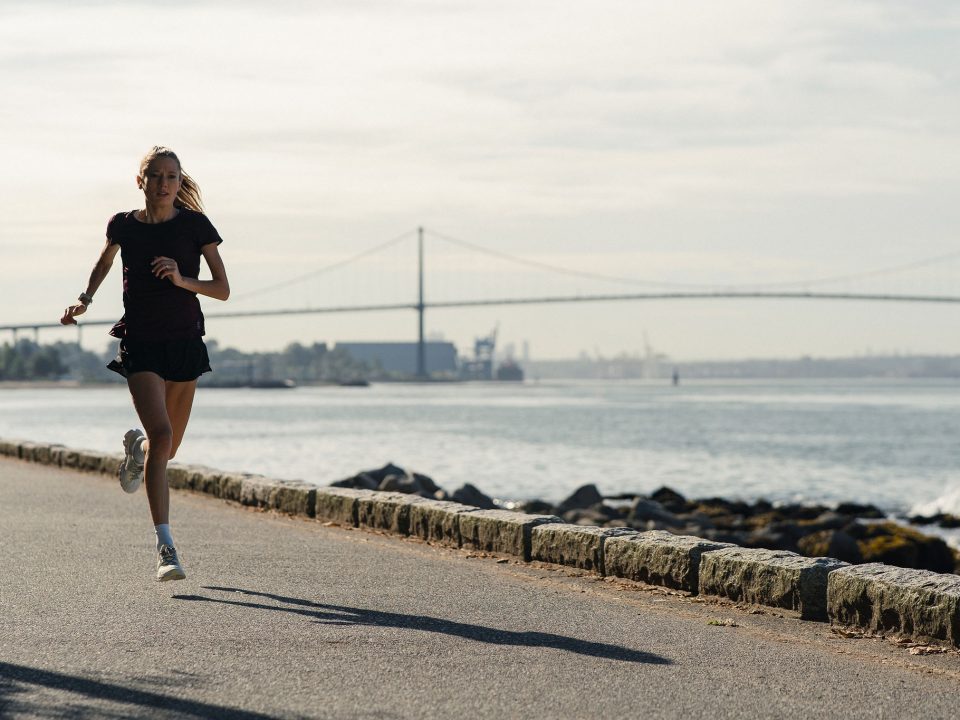
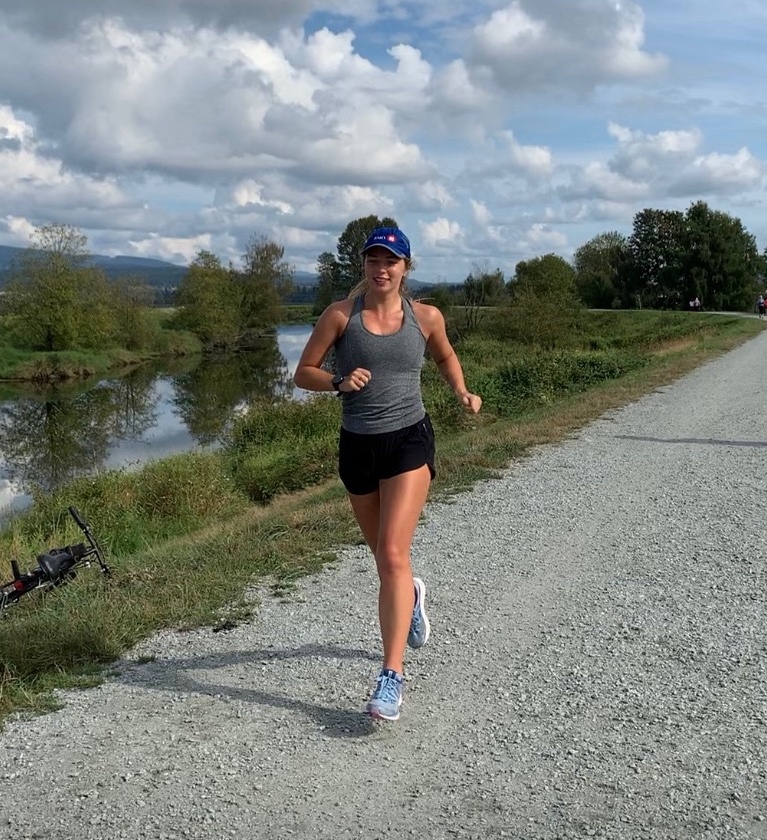
In February, I crossed the finish line of the Vancouver First Half Marathon in 1:17:56—an over two-minute personal best. I was elated. What made that race truly meaningful wasn’t just the time, but how it reflected a more balanced, joyful approach to sport than I’ve ever taken before. I trained hard, yes—but I also lived fully. During the build, I spent three weeks mountain biking in Australia and almost every weekend snowboarding in Whistler. That race answered a question I’ve carried for years: can you truly strike a balance between success in sport and other joys in life? For me, the answer is yes.
This race was a reflection of how I’ve come to define success in running—and in life—and how my relationship with food and fuelling has evolved alongside it.
From Diet Culture to Dietitian
When I applied to the University of British Columbia’s Dietetics program in my early twenties, I thought I knew what “healthy” eating and high-performance sport meant: eat lots of vegetables, never miss a workout. I’ve always had a healthy relationship with food (thanks to my parents), but like many athletes, I still internalized a lot of diet culture messages. Looking back, some of my early Instagram posts from before I started studying nutrition make me cringe (hello, spaghetti with Brussels sprouts instead of meatballs).
When I was accepted into the program, I worried that my relationship with food might be too relaxed—that I wouldn’t be “healthy enough” to belong. But at our first class potluck, I was surprised—and relieved—to see everything from leafy greens to fried chicken and cake. As I progressed through my education, I realized being a dietitian isn’t about restriction or perfection—it’s about nourishment, balance, and understanding food as more than just fuel: it’s culture, connection, comfort, and more.
During my studies, I was competing on the varsity cross country and track team. That experience shaped my life. I made lifelong friends, discovered a deep love of running, and grew immensely as both an athlete and a person. Unfortunately, not everyone’s collegiate experience is so positive. Some athletes face intense pressure, burnout, and disordered eating. I was fortunate—my coaches and teammates nurtured a healthy environment. My first coach, Nikki Reiter, believed in taking the sport seriously—but not so seriously that the joy got lost. My long-time coach, Chris Johnson (CJ), continued that philosophy. He never talked about weight or appearance—just effort, growth, and love for the sport. Many of my teammates have continued to run at a high level post-collegiately, and I truly believe it’s because we were nurtured, not pressured.
The food culture on our team was also refreshingly balanced. There were teammates who struggled—as is all too common in distance running—but overall, we fuelled for performance and for joy. It still makes me emotional when I think about how some of my teammates have told me that my attitude toward food helped shift the team culture in a positive direction and contributed to their own healthy relationship with eating.
Building a Practice, and a New Perspective
Years later, after becoming a registered dietitian and completing the International Olympic Committee’s Diploma in Sports Nutrition, I truly solidified my understanding of how proper fuelling matters—not just for performance, but for long-term health. I also learned more about Relative Energy Deficiency in Sport (REDs), and how common it is among runners. I started to seriously think about launching my own practice so I could help athletes overcome nutrition challenges and unlock their full athletic potential.
Around the same time, I began questioning the path I was on. I was still training seriously with our post-collegiate group, but something had shifted. I was running well—some of the fastest workouts of my life—but I wasn’t hitting the race times I knew I was capable of. I also ended a long-term relationship and found myself re-evaluating how I wanted to spend my time. Did I really want to continue to spend every weekend training—only to maybe shave a few seconds off my personal best? Is this all worth it? Why am I still running so seriously when others have moved on? I’ll never make the Olympics, so why am I trying so hard? I think a lot of post-collegiate athletes can relate to these thoughts that started to creep in.
Taking a Step Back—Then Forward Again
In the fall of 2023, those thoughts became too loud to ignore and I gave myself permission to pull back. I still ran, but I let go of a lot of the rigidity around training. I swapped doubles and long runs for mountain biking, working on launching my private practice, and dating. I met my now-partner, started No Sweat Nutrition, and raced a 1:20 half marathon the following February. I also gained about 15 pounds and for the first time ever, my healthy relationship with food and body image was truly challenged. I had moments of “would I have ran faster if I were lighter?” but I knew the truth: I was fuelling better than ever, and my performance reflected my training (or lack thereof)—not my weight. I felt like I had taken too far of a step back and craved a bit more structure.
After that race, I reintroduced strength training and long runs. I stayed focused on fuelling well: no fasted runs, carbs during anything over 75 minutes, recovery meals soon after training. Despite some solid workouts and a best 10km road race, I ran a few very disappointing 1500s that spring, and wondered if the balance I was yearning for was really possible. Again, thoughts about my weight filled my brain more than ever but I stayed true to what I knew about fuelling for health and performance. After my sub par track season (and for the first time in over 10 years), I took the summer completely off. I barely ran and contemplated what I wanted out of the sport going forward. But it didn’t take long for me to miss running competitively. I missed the feeling of accomplishment after a hard workout. I missed setting a goal and training to achieve it.
So in fall 2024, I started another half marathon build. This time, I focused on the essentials—workouts, long runs, strength—but kept my lifestyle intact. I mountain biked and snowboarded more than I ever have, and continued to nurture No Sweat Nutrition. After a few short months, I started to feel like my old self and to my surprise, was showing signs of personal best potential. I also had the most injury-free training block of my life. My body’s newfound resilience could be attributed to many factors, but I honestly believe the weight I gained during my step back played an important role. In hindsight, even though I wasn’t restricting food in university, I may have been unintentionally under-fueling. This is a common contributor of REDs for athletes. You don’t need to have an eating disorder or disordered eating tendencies to under fuel and have your health and performance affected.
A Full-Circle Moment
Even though training was going well, I knew I didn’t want to go back to the track that summer. I made a big decision mid-build to leave the track and pursue trail running with my now-coach, Jenny Quilty. When I ran the half marathon in February of this year, it felt like a full-circle moment: my last race under CJ’s guidance and a huge personal best—something I wasn’t sure I’d be able to do again. That race showed me I could still grow, still compete, still push—without giving up the rest of my life.
Sure, I could train harder and probably run a couple of minutes faster next year. But that no longer feels worth it. Sport can—and should—be a lifelong relationship. But like any relationship, it evolves. How I trained (and how my body looked) at 25 doesn’t suit who I am at 32—and that’s okay. In fact, I believe some of my best performances are still ahead of me. But the path to get there will be one I’ve never taken before.
Final Thoughts for Young Athletes
To the young athletes reading this:
Fuel well.
Find your people.
Never be afraid to redefine what sport means to you.There’s no one way to be an athlete—but there are so many joyful ways to stay one.
~ Sandra Kilmartin, RD (she/her)
Sandra is a Squamish-based registered sports dietitian, runner, and founder of No Sweat Nutrition. Sandra has a special interest in endurance sports and Relative Energy Deficiency in Sport (REDs) prevention and recovery.